
How Digital Symbols Became Tools of Intention in the Age of Technomancy
Emoji aren’t just cute, they’re powerful. And maybe, just maybe, they’re a little magical. This post is from the archives, but it still rings true in an age where we cast intentions with just a few taps.

(Of course, this assumes emoji survive Elon’s aesthetic reforms. If hashtags are ‘ugly,’ who knows what he thinks of 🔮✨📲? Then again, maybe it’s not aesthetics at all, maybe he just recognises the power. Hashtags, after all, are digital sigils: simple, symbolic, and impossible to ignore).
Ever since I began exploring the vast online universe in the 90s, the way that Internet technology shapes our language and communication has fascinated me. One of my particular areas of interest is the use of emoji and the notable shift towards the convenience of expressing ourselves in pictographs, the earliest known form of writing, but not because we have regressed – on the contrary, I perceive this as evolution. That is an entirely different topic for review which I will leave to the linguists and sociologists as this is not intended to be a scholarly missive; I write this from the heart and through an interest that has been piqued by the way tradition intersects with progress. Discussion and opinion is welcomed, possibly debated but never judged.
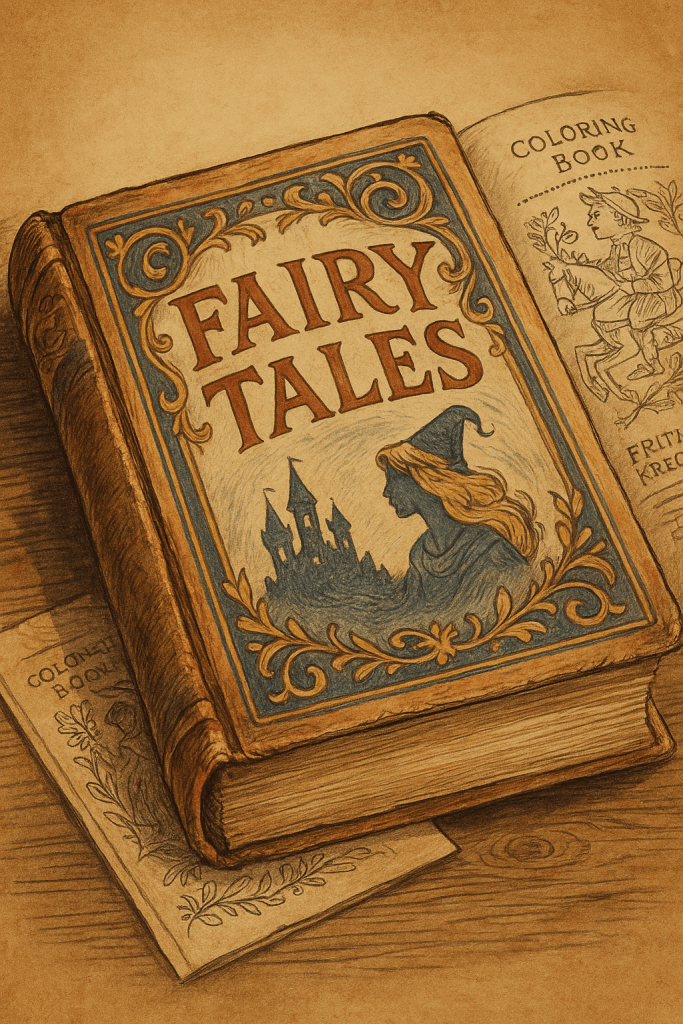
My main literature and language interests are entrenched in folklore, particularly fairy tales and magic. The latter is practically the most generic term I could conjure but both topics span time, culture, geography and language in a way that has always held my fascination and which has undoubtedly been informed by the massive, two volume Reader’s Digest anthology The World’s Best Fairy Tales that my mother bought me when I was a child. I could have killed a troll with them, they were so heavy and I read them until they were near to falling apart.1
I also remember there was a colouring book containing Fritz Kredel’s illustrations that accompanied them. Unfortunately, none of these fine publications made it to my adulthood with me; my mother gifted them, without consultation, along with the rest of my extraordinarily large library to her local school after I left home.
Years of therapy, mother. Years.
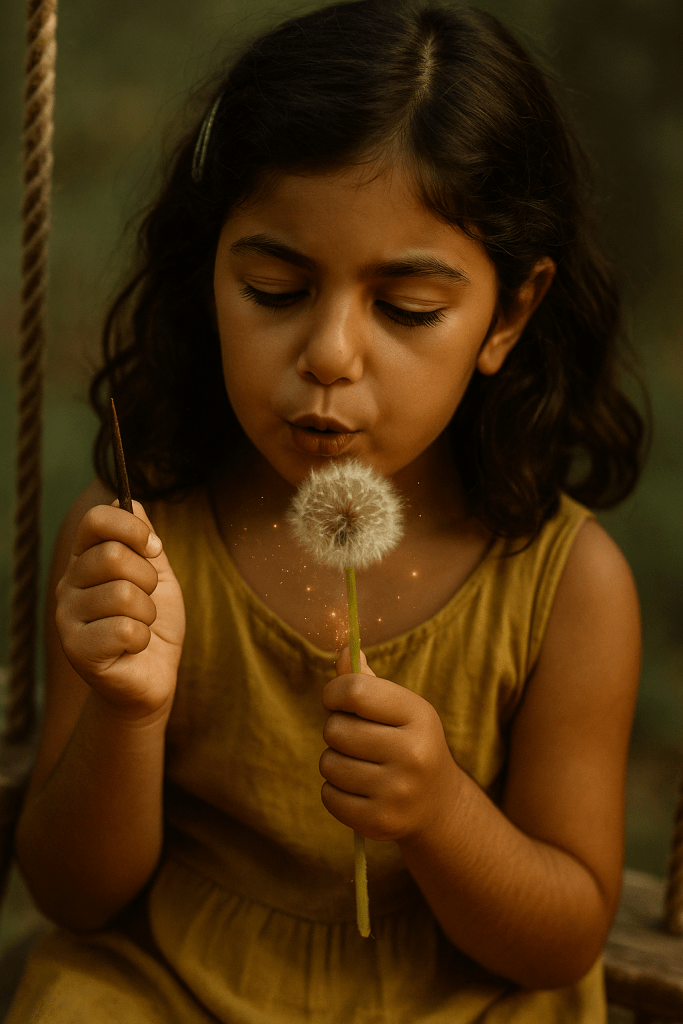
Anyway, back to my childhood, where making mud pies in the garden became experiments in alchemy as I tested the possible magical properties of dandelions and quartz. I wrote tiny charms on leaves with a dressmaker’s pin and sat on my swing, muttering garbled incantations because somehow I knew that their nonsense did not matter – it was their intention that was important.
There was that one time, when I was about nine, that I did dally with my own take on burning in effigy but it (probably) didn’t work and it took weeks to get the odour of singed Barbie out of our coal shed. Yes, I set fire to a plastic thing in a building designed for fuel storage – unsupervised, with matches and propellant; this was before a time when social media would throw their collective apron over their heads and shriek for child protective services to respond.
Child or adult, we have all discovered or dabbled with danger one way or another and that includes matters of the occult; the reports of curious teenagers who have lost their minds after ‘playing’ with Ouija boards are rife across popular culture, both through urban legends and factual accounts. Yet, most of us will have read our daily horoscope report, wished on a star, rubbed a token for luck or kept a mascot; superstition has been so normalised that most of us wouldn’t turn a hair at counting magpies, or peeling a fruit skin to find out the first initial of the person one will marry.
All such supernatural traditions and activities are considered quite innocuous and were in practice long before JK Rowling introduced us to Harry Potter, thus spawning a generation of scarf-wearing, stick-wielding, bobble-hatted, mini-wizards. Again, all harmless stuff – I don’t recall a clamouring of sensational news stories of accidents or injuries in the playground relating to “Reducto” or any other Hogwarts-inspired charms, jinxes or incantations. Not even a concussion at Kings Cross (which continues to amaze me). Granted, there is always a dark side but it depends if you decide to embrace it or not, that is your choice and I am not simply talking Star Wars (just ask any Harry Potter fan about Lord Voldemort); so, trust in your instincts and if something feels right, do it – if it feels wrong, do not.
Of course it was inevitable that our more mysterious pursuits were going to recreate themselves on the Internet. I can remember some of the first online ‘fun’ services being Zodiac and Tarot readings, and here we are in 2025 where things have evolved to the point that for the last several years, emoji spells have been lighting up timelines on platforms like Twitter (now X). They are, in a very broad sense, spells that are constructed from emoji and cast via social media, an emerging form of magic on social media (the small images of expression used in electronic communication) and cast via social media with the purpose of creating positive outcomes and preventing negativity. This really is not a ‘new’ practice, the delivery may be high tech but the root lies in the arcane and basic sigil magic.
The site Broadly previously published an article called “How to Cast Spells Using Emoji” (October 29th, 2015) and mischievously suggested: “Instead of subtweeting your ex, why not cast an emoji unbinding spell instead?” The piece goes on to explain how to prepare, craft and cast emoji spells, providing examples and even advice on the ethics of spell casting.
What does an emoji spell look like? Pretty much like this:
- Fortune: 🔮🔒💠🎲🙂⚜🖇🔓🔮 #Fortune #EmojiSpell ✨
- Positivity: 🔮☀️✨💕😊💕✨☀️🔮 #Positivity #EmojiSpell ✨
- Sleep: 🔮🎐☄☁️🌙☁️☄🎐🔮 #Sleep #EmojiSpell ✨
- Healing: 🔮🏥❤️🌱👨🌱❤️🏥🔮 #Healing #EmojiSpell ✨
These aren’t just decorative. The hashtag itself functions like a digital sigil; a charged symbol that binds intention to expression. By tagging a spell with something like #EmojiSpell, you aren’t just filing it for visibility, you’re activating it. The hashtag acts like a modern glyph: summoning attention, joining collective energy, and anchoring the spell in shared digital space.
You will notice that all of the above samples are palindromic and the aesthetic principle is acknowledged here although, practicality suggests that it is an unnecessary symmetry and wholly subjective. Also, each emoji spell above begins and ends with the Crystal Ball emoji (🔮), symbolizing a circle of protection as well as being a common signifier for an emoji spell. Whether a circle of protection is required for all emoji spells or not (I think that protection should always be invoked) you don’t have to use the Crystal Ball emoji.
The structure of these emoji spells reflects a kind of symbolic language, where each image carries layered intent. Understanding emoji meanings in magic can be just as nuanced as interpreting runes or tarot.
Online spell casting, like most forms of digital witchcraft, is a hugely personal thing and you might want to use an emoji that has more traditional connotations, like the Candle emoji (🕯️) or Fire emoji (🔥), that is specific to your purpose. Do your research by all means but combine that with your instincts and of course – do no harm
As with many contemporary occult practices, the form may evolve but the function remains deeply human: a need to ritualise, connect, and affirm. So, are emoji spells witchcraft and is the practice authentic? Are emoji spells dangerous? The previous examples are perfectly harmless in essence but, there are definitely doubters and to those great and terrible critics, I posit this:
In my opinion, casting any supportive spell is no different to wishing someone ‘good luck’ (🍀) or offering to say a prayer (🙏) for them and there are emoji that have been adopted to illustrate both of those sentiments. Why should any other form of affirmation be any different? I sense no harm.
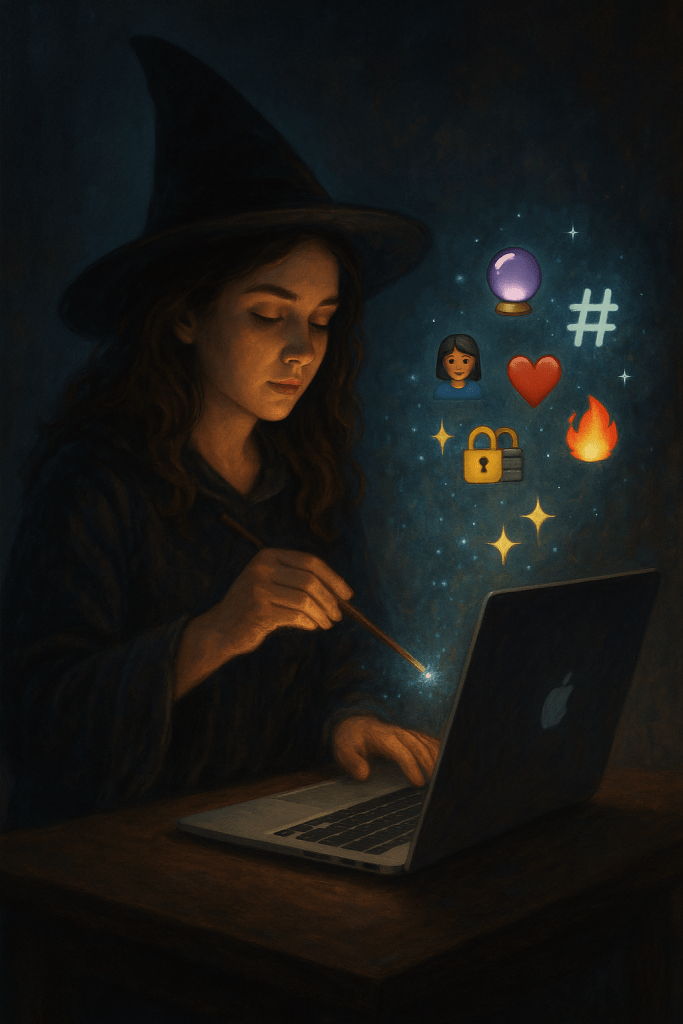
Magic moves with the times, that is why it remains constant. For me, my craft is in the very fibre of my being; physical and spiritual. It is the way I live my life; helping others, passing on knowledge, telling and retelling stories. I didn’t learn it from a book or crouched at the knee of some robed mage; it has always been there, inside of me – it is just what comes naturally to me.
Would I cast an emoji spell? Absolutely. The tools may be new, but the practice is familiar: focus, intention, symbol, release. I don’t need candles or incantations to believe in that. I’ve always crafted my own meanings, on leaves, in ink, in whispers, and emoji are just another language.
Some modern spellcasters invite likes and reposts to charge their work; public energy as fuel.
This can be interpreted as the online extension of a focused group who are singing, praying and/or chanting in unison to increase the reverberation of power but, although I am not opposed to the notion, I am a solitary creature so my personal preference would be to refrain from that type of call to action.
That kind of collective casting has its own resonance, I think, but it’s not how I work. My craft is quiet. I listen, I observe. If I cast an emoji spell, I’d do so alone. And that would be enough.
Were I to cast an emoji spell in earnest, I would expect that any interaction from others would be entirely organic; like the one that may possibly have brought you here in the first place:
🕯💪🏼🍀✍🏼💬📰📖📱💻📧🗺️👣🌙🕯
#Productivity #Creativity #EmojiSpell ✨
Finally, not everyone wants the world to know about their crafting, and maybe that’s part of why emoji spells remain quietly powerful, even as they travel through public feeds. Spell casting, especially within techno witchcraft or modern magic, is still deeply personal. So if you prefer to keep your workings unseen, do. Email your emoji spell to yourself. Whisper it in a direct message. Tuck it away in a hidden folder like a digital charm bag.

In magic, as in emoji, it’s not always what’s visible that holds the power, but what’s intended.
Blessed be.
- I do not and never have advocated the killing of trolls; no trolls were harmed in the writing of this blog. ↩︎
 Melanie Lampro
Leave a comment